Active fire protection
Fire suppression systems
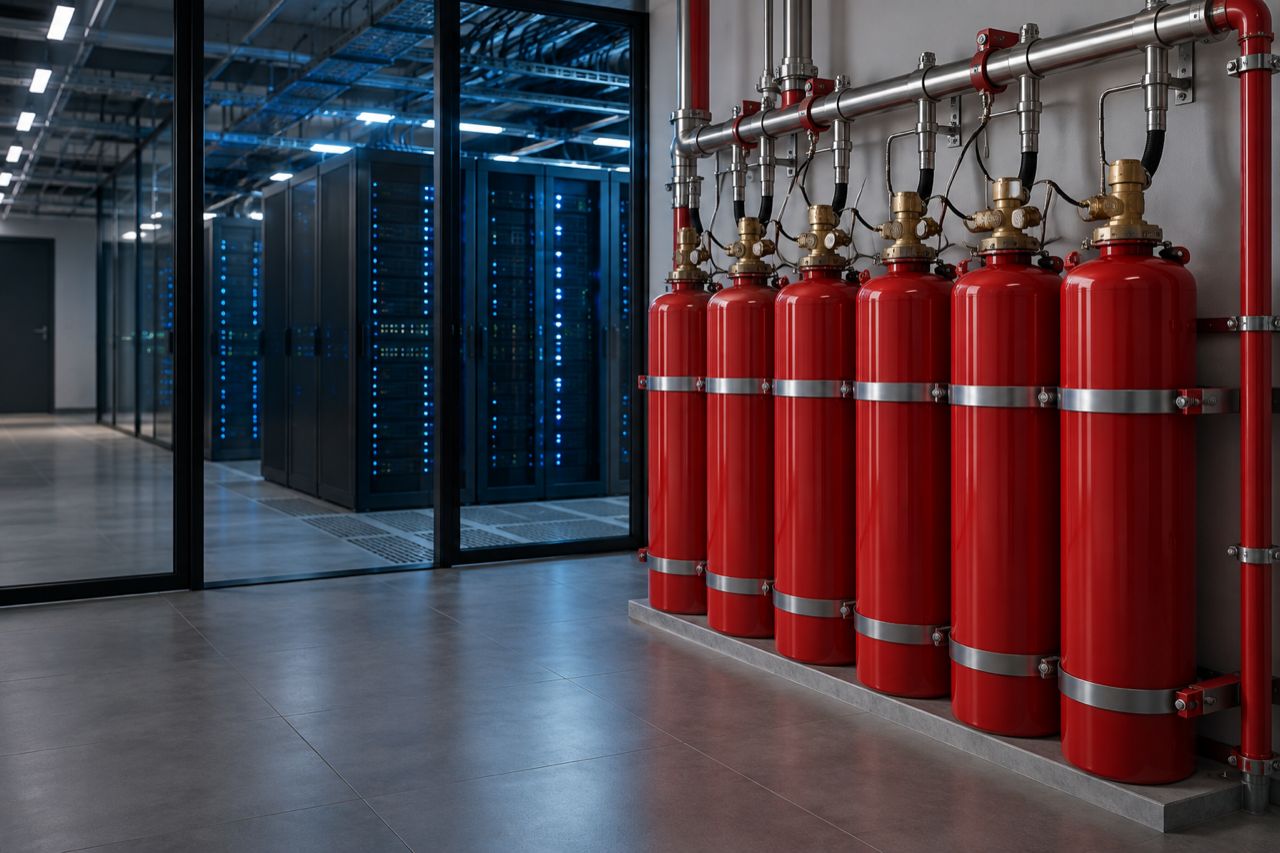
We design, install and maintain fixed gas and foam suppression systems, and F-Class systems for commercial kitchens.
A fixed suppression system puts out a fire automatically in the space it protects, with gas, foam or a special wet agent, without waiting for anyone to step in. Pyroprolipsi holds ISO 9001:2015 certification for the study, design, installation and maintenance of fixed firefighting systems.
What we design and install
This area covers:
- Gas suppression systems with IG-541, Inergen, Argonite, FM-200, CO2 and Novec (FK-5-1-12)
- Foam suppression systems
- Commercial kitchen suppression systems, F-Class
Gas suppression for electrical and IT rooms
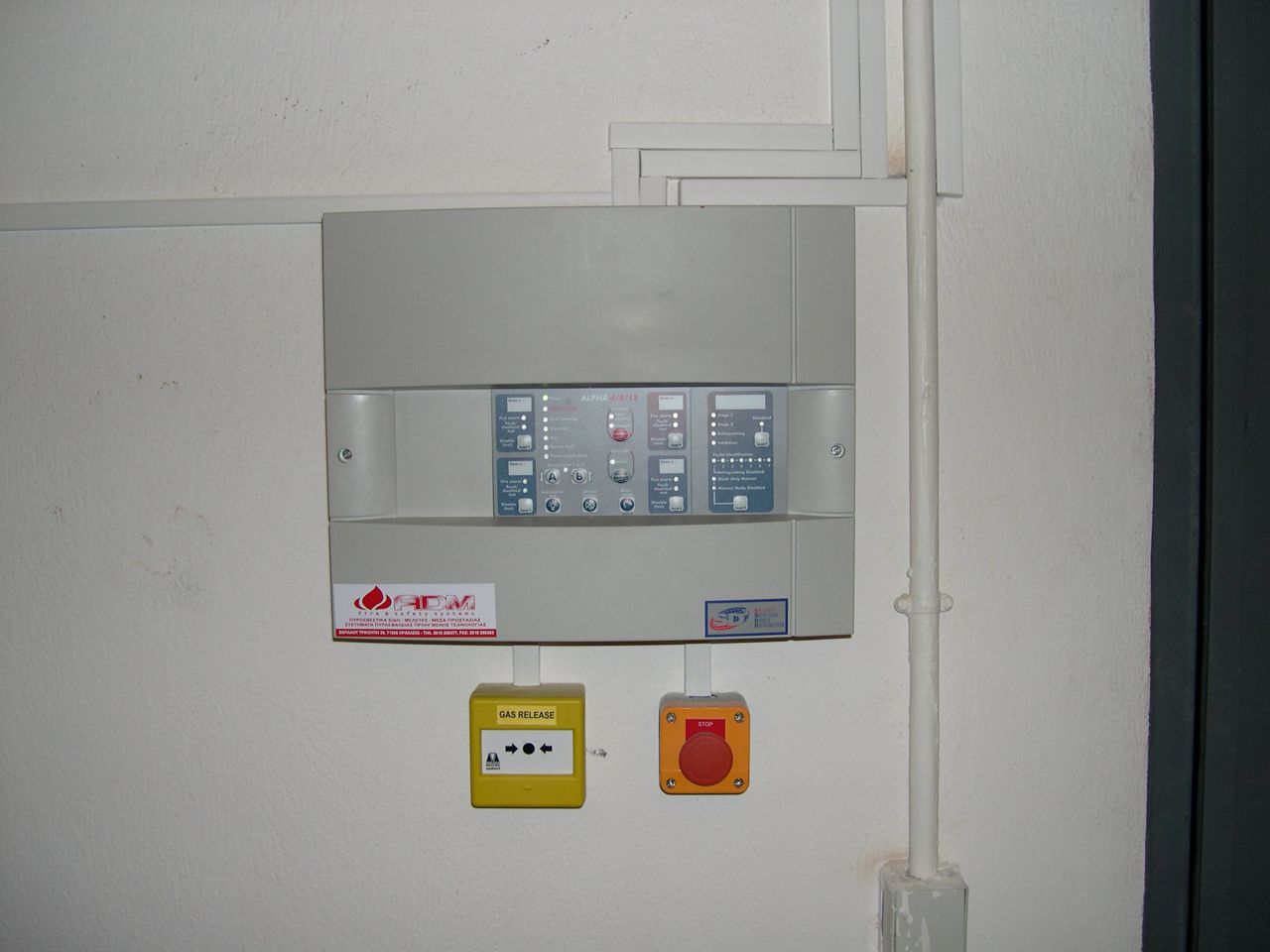
Gas systems flood the room with the extinguishing agent (total flooding) and put out the fire without water, which is why they are used in server rooms and electrical rooms. They operate automatically, through a local detection panel to EN 12094, or manually.
The inert gases IG-541, Inergen and Argonite lower the oxygen in the room below the level a fire needs. The chemical agents FM-200 (HFC-227ea) and Novec (FK-5-1-12) absorb the heat of the flame. CO2 is used mainly in rooms that are not normally occupied.
Manufacturers we have worked with in this category: Minimax for Argonite systems and TWF for Inergen systems.
Foam suppression for fuels and tanks
Foam blankets the surface of a flammable liquid, cuts it off from the air and puts out the fire. It is used for fuel tanks, refineries and industrial plants that handle flammable liquids.
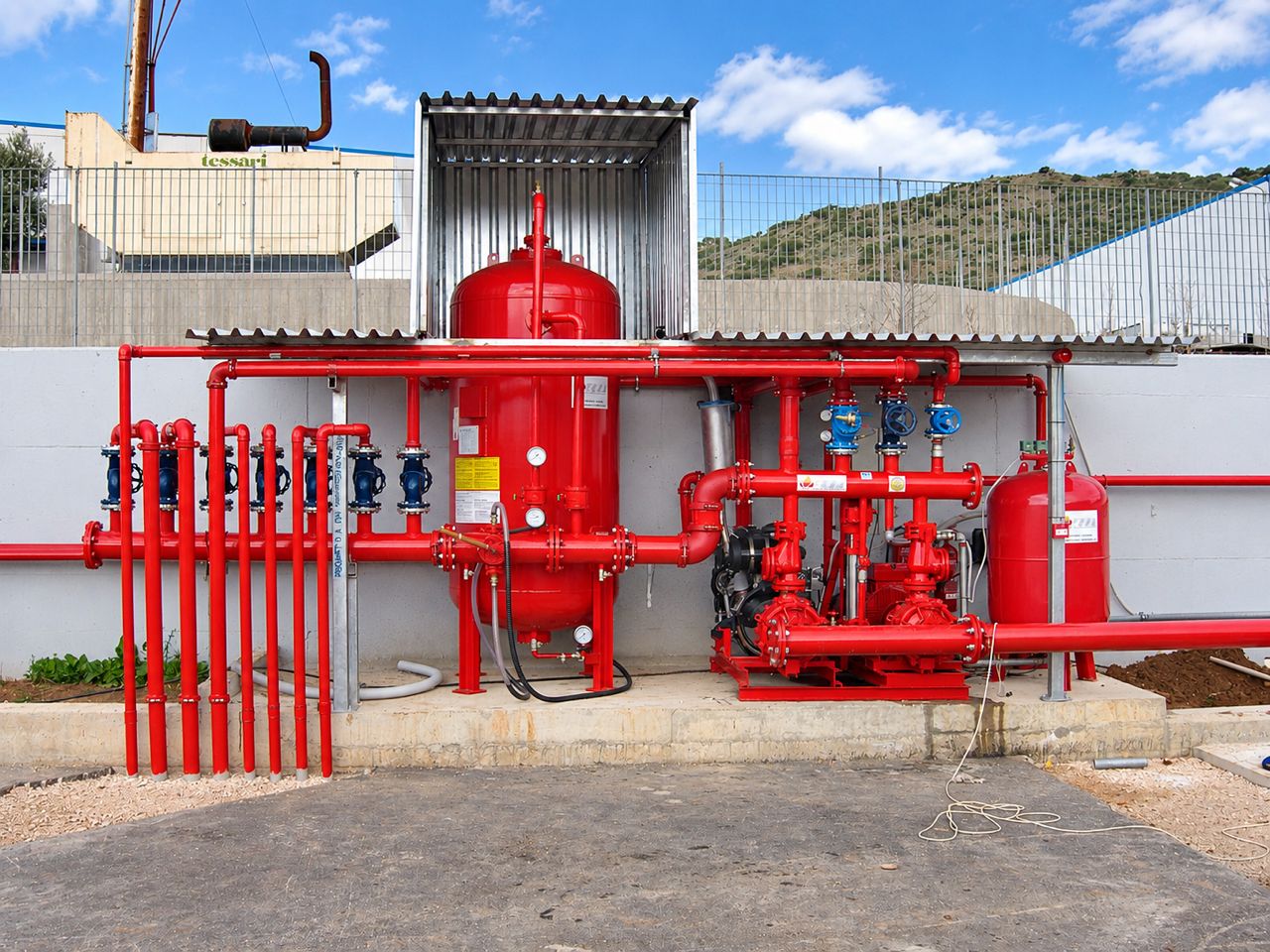
Our projects include pump stations with foam bladder tanks, proportioners, tank foam chambers, foam sprayers, tank cooling nozzles and portable water and foam monitors. Manufacturer we have worked with: K.C. Antincendi.
F-Class commercial kitchen suppression
Fires in cooking oils and fats (class F) must not be fought with water. F-Class systems are fitted in the extraction hood and above the cooking appliances, detect the fire and spray a special wet agent that puts it out and cools the oil.
We have installed F-Class systems in hotel commercial kitchens, with pipework inside the hood and both automatic and manual release.
From the study to maintenance
The work starts with the study: we choose the right agent for each space and calculate the quantity and the pipe network. We then source the equipment from recognised manufacturers.
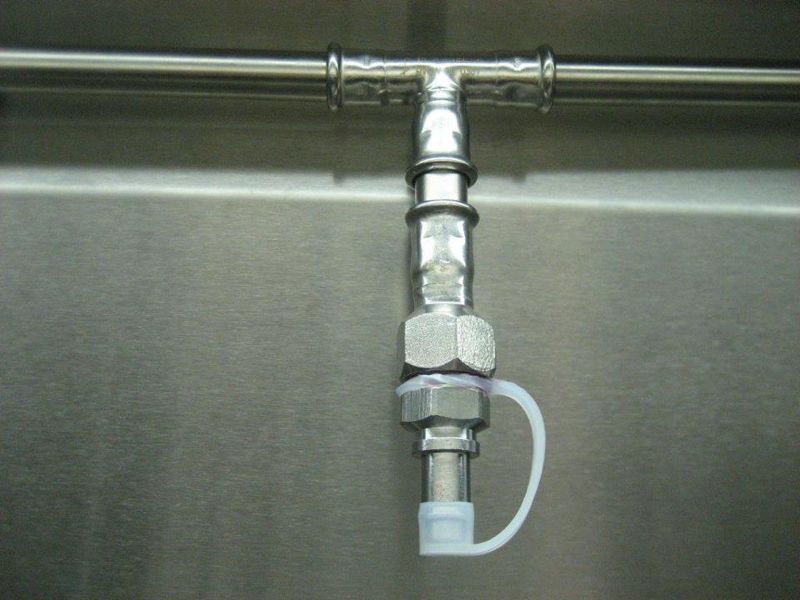
The same team builds the pipework, in steel for suppression systems and copper for kitchen systems, installs the local detection that controls them and takes care of maintenance.
Projects
From our installations
CO2 systems, foam networks and commercial kitchen systems from our projects, including performance tests.


Related services
Services that pair with fire suppression

FAQ
What clients ask us most
Which suppression system suits a server room?
Usually a gas system, because it puts out the fire without water and leaves no residue on the equipment. The choice between an inert gas, FM-200, Novec or CO2 depends on the volume of the room, how airtight it is and whether people work there. We have installed CO2 systems in a server room and FM-200 systems in offices.
Is gas suppression safe for people in the room?
Yes, when the agent and its concentration are chosen correctly for the space. Inert gases, FM-200 and Novec are designed at concentrations suitable for occupied rooms. CO2 is dangerous at extinguishing concentration, so it is preferred for rooms that are not normally occupied. Before discharge the system sounds a warning and has an abort button.
Why does a commercial kitchen need an F-Class system?
Because fires in cooking oils and fats must not be fought with water and easily reignite while the oil stays hot. An F-Class system sprays a special wet agent inside the hood and above the cooking appliances, puts out the flame and cools the oil. It releases automatically through detection or manually with a button.
When do you need a foam suppression system?
When the risk comes from flammable liquids, such as fuel tanks, refineries and plants that store petroleum products. Foam blankets the surface of the liquid and cuts it off from the air. We have installed foam systems at a refinery and on industrial oil tanks, with pump stations, bladder tanks, foam chambers and water and foam monitors.
How is a suppression system released?
Automatically, when the local detection panel receives a fire signal from the detectors in the room, or manually with a release button. Before discharge, sounders and warning signs come on so the room can be cleared, and an abort button is available. These panels follow EN 12094.
Next step
Need a fire safety study or a quote?
Send us the details of your project or give us a call. One of our engineers will get back to you.